


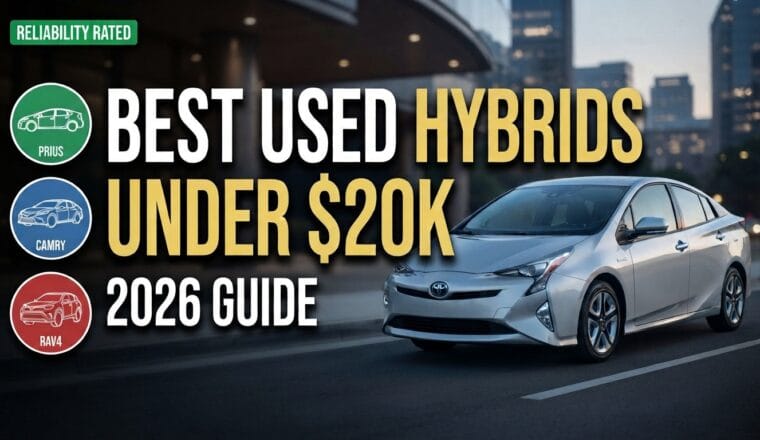
Best 7 hybrid cars under 20000: Best Reliable Picks for 2026
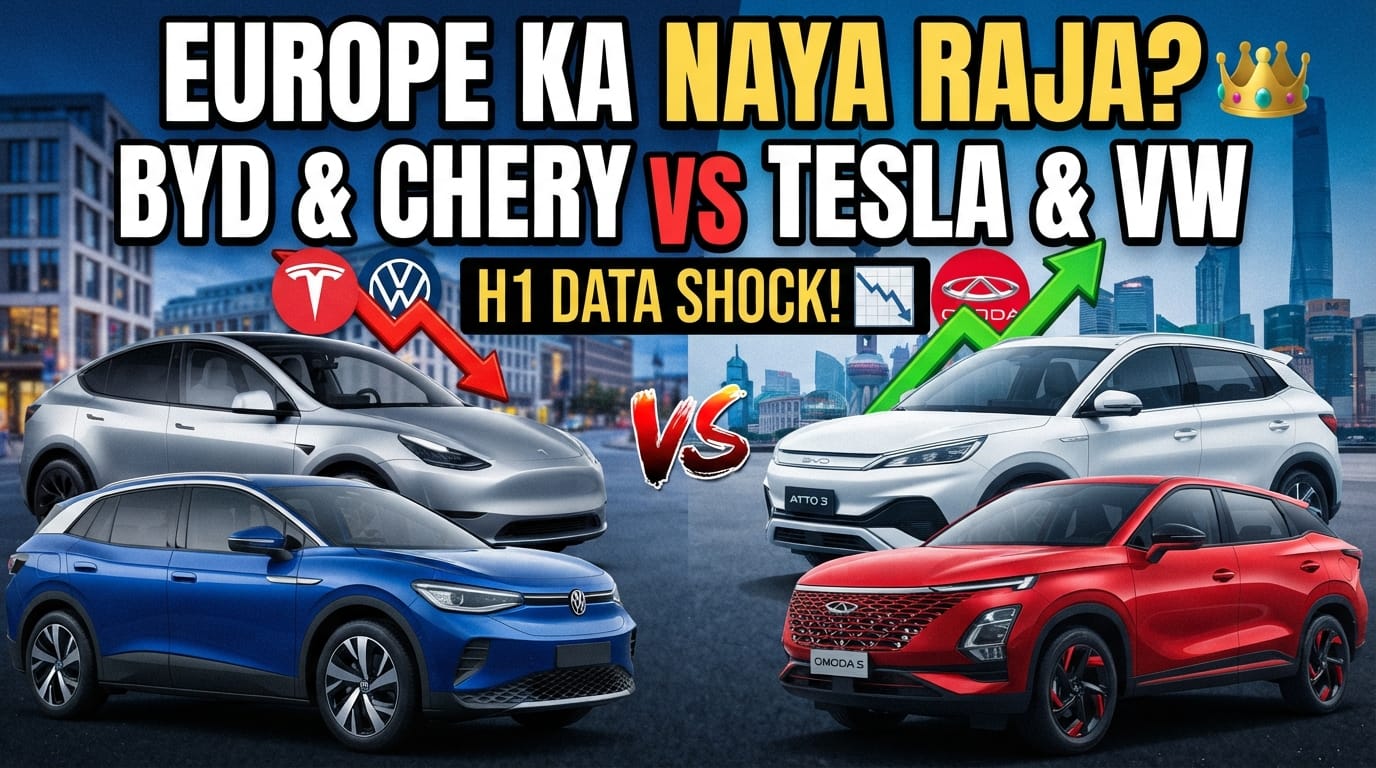
BYD & Chery Europe Sales: Are Tesla & VW in Trouble? (2026)
Europe’s car market has rarely shifted as fast as it has over the past couple of years. Where Volkswagen, Tesla, Renault and Stellantis once dominated the conversation, Chinese carmakers have completely rewritten the script. The H1 2026 sales data confirms it: BYD and Chery Europe sales have surged in a way few analysts predicted even a year ago.
According to official figures from ACEA (the European Automobile Manufacturers’ Association), both BYD and Chery posted triple-digit year-on-year growth in the first half of 2026 — and this isn’t a one-off spike. It’s the result of a deliberate, well-executed expansion strategy. In this article, we break down why these Chinese brands are growing so fast in Europe, how much pressure giants like Tesla and Volkswagen are actually feeling, and what the legacy automakers are doing to fight back.
The Explosive Growth of BYD and Chery Europe Sales
Looking at ACEA’s H1 (January–June) 2026 data, the numbers are striking:
- BYD’s sales jumped over 145% year-on-year, making it one of the fastest-growing EV and PHEV brands on the continent.
- Chery’s sales surged more than 300%, a genuinely record-breaking figure for the industry.
- Combined, the two brands have now outsold long-established names like Nissan, Suzuki, and Mazda in overall registrations.
- Much of Chery’s growth comes from its Omoda, Jaecoo, and Jetour sub-brands, which have found strong demand in the petrol, hybrid, and PHEV segments.
- BYD’s growth isn’t just about EVs either — its PHEV lineup, including models like the Seal U DM-i, has played a major role.
These aren’t just “good quarter” numbers — they signal a structural shift. Chinese brands are no longer niche players in Europe; they’ve become mainstream competitors.
Which Markets Felt the Biggest Impact?
Italy, Spain, and Germany have seen some of the most visible growth from Chinese brands, helped along by government EV incentives that have accelerated the trend even further.
Why Are Tesla and Volkswagen Feeling the Pressure?
When two new players gain market share this fast, pressure on the incumbents is inevitable. Here’s why it’s happening:
1. Aggressive Pricing
BYD’s entry-level model, the Dolphin Surf, starts in the low €20,000s — well below Tesla’s cheapest offerings. Chery’s Omoda and Jaecoo models have also entered the market with sharp, competitive pricing, drawing in budget-conscious European buyers.
2. Advanced EV and PHEV Technology
Chinese brands aren’t just selling cheap cars — they’re competitive on technology too. Fast-charging batteries, long-range PHEVs, and modern infotainment systems are making these cars genuinely good value, not just affordable ones.
3. Faster Delivery and Local Production
Both BYD and Chery have rapidly expanded their European production and distribution networks, cutting delivery times significantly — a factor that used to be one of Tesla’s biggest advantages.
Volkswagen, still Europe’s number-one brand by volume, has already lost a chunk of market share, while Tesla has had to work hard just to recover its sales momentum.

How European Giants Are Fighting Back
The good news is that Tesla and Volkswagen aren’t sitting still. Both are making significant strategic moves:
- Tesla has cut prices across several models to stay competitive with Chinese rivals — and it’s working, with Tesla’s sales showing signs of recovery in recent months.
- Volkswagen Group has rolled out budget-friendly EV initiatives, including new compact electric models aimed directly at the price segment where BYD and Chery compete.
- Several European automakers are localizing their supply chains to cut production costs and speed up deliveries.
- Dealership experience and marketing are also being upgraded to protect customer loyalty.
These moves show that legacy automakers are taking the threat seriously — but the question remains whether it will be enough.
Conclusion: What’s Next for the European Market?
The growth behind BYD and Chery Europe sales doesn’t look like a temporary blip — it looks like the start of a new era for the European auto industry. If Chinese brands keep growing at this pace, Europe’s competitive landscape could look dramatically different within just a few years.
Tesla and Volkswagen still have time to strengthen their position, but they’ll need to move fast on pricing, technology, and delivery speed all at once. One thing is already clear: European consumers are getting more choice, sharper pricing, and more advanced technology than ever before — and that competition works in their favor.
What do you think? Will BYD and Chery keep overtaking Volkswagen and Tesla in the years ahead, or will these European giants reclaim their market leadership? Share your thoughts in the comments below!
Meta Description: BYD and Chery Europe sales surge 145% and 300%+ — a real threat to Tesla and Volkswagen, or a new opportunity? Read the full breakdown.

gta v dinero com gta v mods
wild trucks wild truck
Мелкая работа: монтаж напольного плинтуса — цена за метр стоимость погонного метра по реальным сметам и диапазон расценок.
Нужен спорт инвентарь? оборудование для физического развития детей в детском саду комплексные решения для оснащения спортзалов школ и образовательных учреждений. Спортивные снаряды, тренажеры, мячи, маты и инвентарь для проведения уроков физкультуры и спортивных мероприятий.
Top picks for you https://daydainhua.net.vn/ethiopian-slot-machine-gaming-experience-with-habtam-bet-betting-open-now/
wild trucks slot free spins wild trucks how to get free spins
Зламався пульт від кондиціонера? оригінальний пульт для кондиціонера універсальні та оригінальні моделі для різних марок кліматичної техніки. Підберіть сумісний пульт по виробнику та моделі кондиціонера, оформіть замовлення з доставкою та швидко відновіть зручне керування пристроєм.
Проблемы с лверным замком? вскрыть дверь ключи остались внутри специалист определит причину блокировки, подберет подходящий способ открытия и при необходимости выполнит ремонт или замену неисправного замка.
Нужен займ? https://zaym-s-prosrochkami.ru одборка предложений МФО для заемщиков с действующими или прошлыми задержками платежей. Сравните условия, суммы, сроки, требования к заемщикам и способы оформления займа онлайн.
Хочешь взят ьзайм? https://zaymy-na-30-dney.ru подборка предложений для быстрого получения денег онлайн. Сравните условия МФО, доступные суммы, требования к заемщикам, сроки возврата и особенности беспроцентного периода.
Срочно нужны деньги? займ по сбп удобный способ получить деньги онлайн с быстрым переводом через систему быстрых платежей. Сравните суммы, сроки, требования МФО, условия оформления и способы получения средств.
Быстрый займ онлайн https://zaymy-na-kartu-mir.ru подборка предложений МФО с возможностью онлайн-оформления и перевода средств на карту. Сравните суммы, сроки, требования, процентные ставки и условия получения займа.
Быстрый займ онлайн займ на карту мир мгновенно подборка предложений МФО с возможностью онлайн-оформления и перевода средств на карту. Сравните суммы, сроки, требования, процентные ставки и условия получения займа.
An online guide https://healthfare.ca/ dedicated to wellness, healthy eating, and a balanced lifestyle. The website features relevant articles on healthy eating, along with practical advice. Visitors can also access product overviews. Particular focus is placed on balanced daily habits, healthy eating and diet, physical activity, personal care, and a healthier lifestyle.
An online guide healthfare focused on healthy living, nutrition, and self-care. The website features informative publications on food choices, along with expert guidance. The resource also features product overviews. Among the main topics are balanced daily habits, nutrition and food choices, exercise and fitness, personal care, and everyday health.
Сучасний портал для читачів https://altavista.org.ua містить пізнавальні матеріали та огляди.
[…] 15 Reviews All reviews by itznisar251 → ← Previous Review BYD & Chery Europe Sales: Are Tesla & VW in Trouble? (2026) […]