

SEO META PACKAGE (paste into your CMS fields — not part of the visible article)
- SEO Title Tag: Range Rover Electric Review (2026): Price, Range & Verdict
- Meta Description: Our 2026 Range Rover Electric review covers price, real-world range, charging speed, and off-road ability, plus how it compares to the BMW iX and Volvo EX90.
- URL Slug: /range-rover-electric-2026-review
- Focus Keyword: Range Rover Electric review
- Secondary Keywords: Range Rover Electric price, Range Rover Electric range, Land Rover first EV, Range Rover Electric vs BMW iX
- Category: Luxury Electric SUVs
- Target Audience: US & European luxury SUV buyers
- Last Updated: July 2026 · Est. Reading Time: 10 minutes
2026 Range Rover Electric Review: Land Rover’s First EV Finally Arrives
After more than a year of delays, prototype testing from the Arctic Circle to the Arabian desert, and more than 60,000 expressions of interest, Land Rover’s first-ever production EV is almost here. The 2026 Range Rover Electric doesn’t try to reinvent the Range Rover — it tries to prove that electric power belonged there all along.
We’ve pulled together everything confirmed so far from early press drives, JLR’s own engineering briefings, and manufacturer data: price, range, charging, off-road ability, and how it stacks up against the BMW iX and Volvo EX90. Full production units haven’t reached customers yet, so treat this as a detailed first-look review rather than a final verdict — we’ll update it once deliveries begin.
Quick Facts: 2026 Range Rover Electric at a Glance
| What it is | Land Rover’s first fully electric production model, built on an updated version of the existing Range Rover’s platform |
| On sale | Second half of 2026; first deliveries expected around Q4 2026 |
| Battery | 118kWh usable, 800-volt architecture |
| Power | 542 hp / 627 lb-ft, dual-motor all-wheel drive |
| Estimated range | ~300 miles (483 km) real-world target; likely 250 miles (400 km) or less at motorway speeds |
| Fast charging | 10–80% in around 20 minutes on a suitable DC charger |
| Price (est.) | From roughly £150,000–£170,000 in the UK; US and EU pricing not yet confirmed |
| Key rivals | BMW iX, Volvo EX90, Mercedes EQS SUV, Porsche Cayenne Electric |
| Early verdict | 8.5/10 — desirable, quiet and genuinely capable, but expensive and still short of a full production test |
What Is the Range Rover Electric?
The Range Rover Electric is Jaguar Land Rover’s (JLR) first EV since the Jaguar I-Pace, which was discontinued in 2024. Rather than building a dedicated EV sub-brand or a radically different body style, JLR chose to make its first electric model look, feel, and drive as close to a standard Range Rover as engineering would allow.
It’s built on an updated version of the MLA-Flex platform that already underpins the petrol, diesel, and plug-in hybrid Range Rover — a platform JLR says was designed from the outset with a full battery-electric variant in mind. This is the opening move in a broader electrification push: the Range Rover Electric is expected to be followed by a Range Rover Sport Electric, and later a Velar Electric built on JLR’s new dedicated EMA (Electric Modular Architecture) platform, as the brand works toward full electrification by 2030.
Design: The EV You’d Struggle to Spot
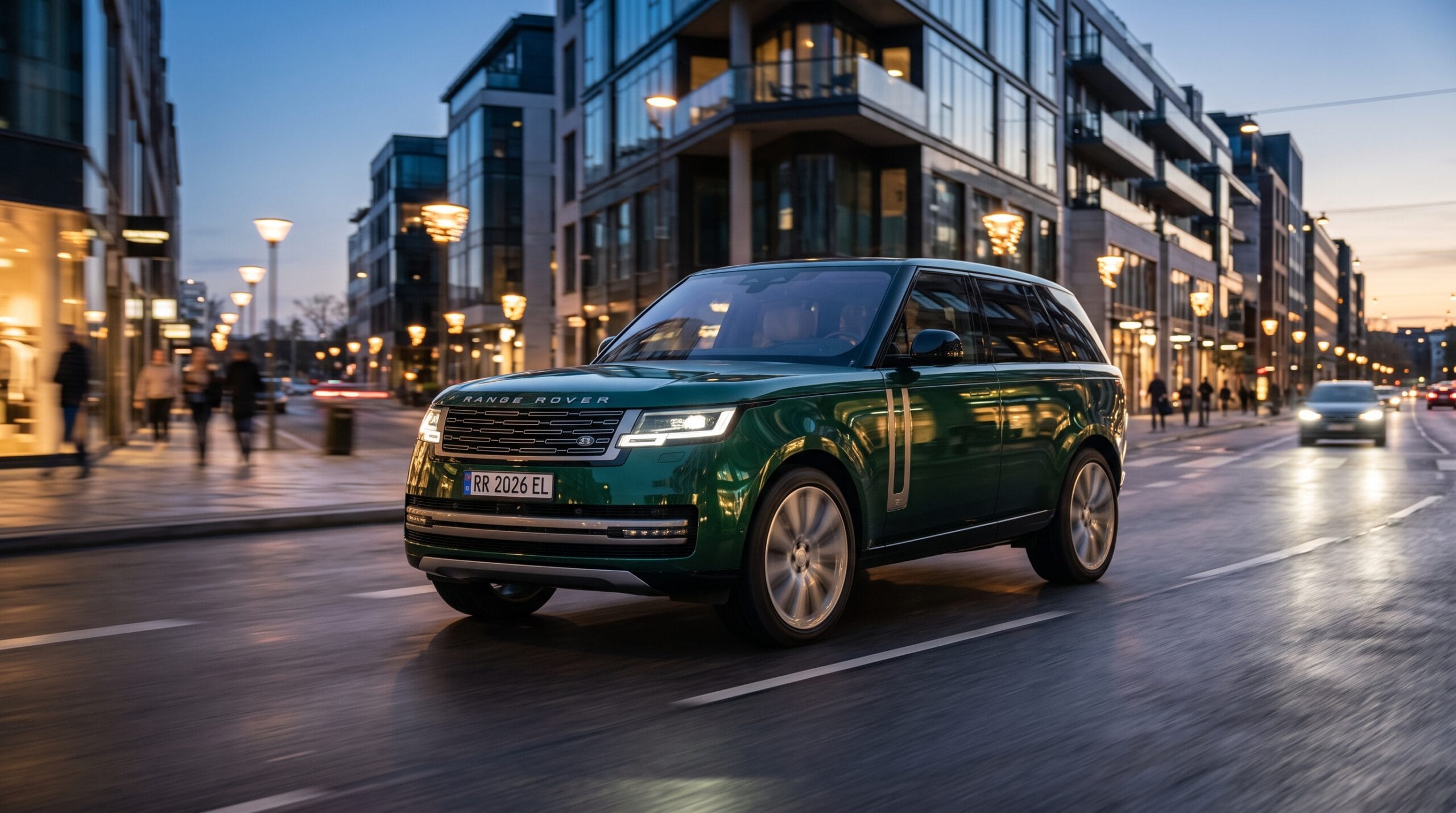
Park a Range Rover Electric next to a petrol or plug-in hybrid version and most people won’t notice a difference. That’s deliberate. JLR’s engineering team has said its research pointed to buyers wanting a Range Rover first and an electric car second, so the changes are subtle: a reworked, closed-off grille, bespoke wheel designs, and dual charging ports mounted either side of the rear bumper. There’s no dedicated EV badge announcing what’s under the skin.
One trade-off of adapting an existing platform rather than starting from a clean sheet is that the front of the car is still packed with control units and motor components, so the Range Rover Electric misses out on a front trunk (“frunk”) — a feature buyers have come to expect from purpose-built EVs.
Interior and Technology
Because the cabin is shared with the rest of the Range Rover lineup, the EV inherits one of the most luxurious interiors in the SUV class: available massage front seats, an Executive Class rear-seat package with its own touchscreen controller, a panoramic roof, and a choice of semi-aniline leather or a new textile blend of Ultrafabrics and Kvadrat wool for buyers who want a leather-free cabin. Remote monitoring and control comes through Land Rover’s companion app.
What isn’t yet confirmed is whether the EV gets any electric-specific software, such as a dedicated energy or range-management display distinct from the combustion car’s setup. That’s one of the details worth watching for as the on-sale date approaches.
Performance: 542 Horsepower, Delivered Smoothly
Power comes from twin permanently excited synchronous motors — one per axle — built in-house with a silicon-carbide inverter, for a combined 542 hp and 627 lb-ft of torque. JLR describes the on-road performance as comparable to the flagship petrol V8, which currently covers 0–60 mph in 4.3 seconds, though Land Rover hasn’t published an official 0–60 figure for the EV yet.
The bigger story is what the electric motors do for control. JLR engineers say the fully independent torque split between axles reacts to wheel slip around 100 times faster than the system in the combustion Range Rover — most noticeable off-road, where instant, precise power delivery replaces the small delays inherent to a traditional drivetrain. On road, early testers from Autocar and Top Gear both noted a lower center of gravity and more linear, tied-down handling than the standard car, despite the EV weighing in at a targeted 2.8 tonnes — only around 100kg more than the plug-in hybrid.
Battery, Range and Charging Explained
The Range Rover Electric uses a 118kWh usable nickel-manganese-cobalt (NMC) battery, currently assembled at JLR’s Wolverhampton facility ahead of a move to the company’s new gigafactory in Somerset later in 2026.
Land Rover’s internal target is around 300 miles (483 km) of real-world range. JLR’s own engineers have been candid that this figure is likely to drop to 250 miles (400 km) or lower during sustained motorway driving, where the Range Rover’s tall, boxy shape works against aerodynamic efficiency, and further still when towing.
An 800-volt electrical architecture — a genuine advantage over several older-generation rivals — supports DC fast charging from 10–80% in around 20 minutes on a sufficiently powerful charger, though JLR hasn’t published a final charging curve or peak kW figure. For daily use, the car supports 22kW AC charging at destination chargers and standard 7kW AC home charging overnight.
Because a Range Rover has to perform reliably from desert heat to Arctic cold, JLR built a thermal management system that continuously balances more than 300 variables between range, charging speed, and cabin comfort. A heat pump is standard and, according to JLR, remains effective down to around -15°C. One practical downside of all that battery and thermal hardware: towing capacity drops from the standard Range Rover’s 3.5 tonnes to 2.5 tonnes on the EV — worth knowing if you regularly tow a trailer or boat.
Off-Road Capability: Does It Still Feel Like a Range Rover?
This is where the Range Rover Electric separates itself from every other luxury electric SUV on this list. It keeps adjustable-height air suspension — borrowed twin-chamber units from the Range Rover Sport for tighter body control — along with four-wheel steering and a Terrain Response system re-tuned specifically for the instant, precise torque delivery only an electric motor can provide.
A lower and more consistent center of gravity (fuel-load weight shifts simply don’t exist on an EV) gives the chassis more predictable behavior in both everyday driving and technical off-roading. It’s also around 7dB quieter in the cabin than the combustion Range Rover — a meaningful gain in a vehicle where silence is as much a part of the luxury pitch as horsepower. Prototype testing so far has spanned the Arctic Circle in Swedish Lapland, JLR’s Eastnor Castle off-road proving ground, and temperature extremes from well below freezing to desert heat.
Price and Availability: US, UK and Europe
UK: Industry reporting places pricing at roughly £150,000 to £170,000, positioning the Range Rover Electric well above every existing Range Rover trim and into territory shared with the Bentley Bentayga and lower-tier Rolls-Royce models.
US: Land Rover has not announced official US pricing. For context, the standard 2026 Range Rover already spans $115,450 to $241,050 depending on trim, and the EV is positioned as the new range-topper with unique, in-house-developed technology. Expect a starting price north of $150,000 once it’s confirmed — treat any lower figure you see elsewhere as speculation until Land Rover makes an official announcement.
Europe: No market-by-market pricing has been released yet. Expect positioning similar to the UK once local taxes are factored in.
Timing: JLR has confirmed a second-half-2026 launch, with first customer deliveries expected around Q4 2026 — later than the car’s originally planned 2025 debut, which was pushed back to allow more testing time. More detail was expected around JLR’s mid-June 2026 Investor Day. Notably, JLR says it already has more than 60,000 expressions of interest on file — enough, if converted to firm orders, to represent over a year of production, which suggests waiting lists are likely once the car officially launches.
Range Rover Electric vs. the Rivals
| Range Rover Electric | BMW iX xDrive50 | Volvo EX90 Twin Motor | |
|---|---|---|---|
| Starting price | Est. £150,000+ (UK); US TBC | $76,325 (US) | $77,990 (US) / ~£100,000 (UK) |
| Power | 542 hp / 627 lb-ft | 516 hp | 402–510 hp |
| Usable battery | 118 kWh | ~105 kWh (est.) | 106 kWh |
| Est. range | ~300 mi / 483 km (real-world target) | Up to 383 mi / 616 km (EPA) | Up to 305 mi / 491 km (EPA) |
| DC fast charge (10–80%) | ~20 min (800V) | ~30–35 min (400V) | ~22 min (800V, 2026 models) |
| Off-road capability | Class-leading | On-road focused | On-road focused |
| Seating | 4 / 5 / 7 | 5 | 6 / 7 |
Figures for the Range Rover Electric are pre-production estimates. Land Rover has not yet released final EPA- or WLTP-certified numbers.
The takeaway: nothing else in this class combines genuine off-road engineering with Range Rover’s specific brand of understated luxury. But on paper, both the BMW iX and Volvo EX90 offer more officially-verified range for significantly less money — the Range Rover’s premium is about badge, cabin, and capability you may never actually use, not outright EV efficiency.
Pros and Cons
Pros
- Retains genuine Range Rover off-road ability, ride quality, and cabin refinement
- Distinctive in-house 800V/118kWh architecture with competitive fast-charging speed
- Noticeably quieter than the combustion and hybrid Range Rover models
- Strong early demand (60,000+ expressions of interest) suggests solid resale confidence
Cons
- Estimated pricing puts it out of reach for most existing Range Rover buyers
- Real-world motorway range likely closer to 250 miles than the claimed 300
- Towing capacity drops noticeably compared to the combustion version
- No frunk, despite added weight from EV components up front
- Looks almost identical to the existing model — a letdown for buyers who want their EV to look the part
Our Verdict: 8.5/10 (Early Assessment)
Based on prototype and pre-production testing, the Range Rover Electric looks like a genuinely convincing first EV — not because it reinvents the formula, but because it doesn’t need to. The combination of near-silent cruising, retained off-road credibility, and JLR’s obvious engineering care around thermal management suggests this won’t be a compliance EV bolted onto an existing car as an afterthought.
The real questions — final pricing, certified range, and how it behaves once it’s actually in customers’ hands rather than on a press launch — are still open. We’ll revisit this review with a full rating once deliveries begin and independent, real-world testing is possible.
Frequently Asked Questions
When does the Range Rover Electric go on sale? Land Rover has confirmed a second-half-2026 launch, with first customer deliveries expected around Q4 2026.
How much does the Range Rover Electric cost? UK pricing is estimated at roughly £150,000–£170,000. US and European pricing has not been officially announced; expect a US starting price north of $150,000.
What is the real-world range of the Range Rover Electric? Land Rover’s internal target is around 300 miles (483 km), though JLR itself expects that to fall to around 250 miles (400 km) or less during sustained motorway driving.
How fast can you charge the Range Rover Electric? Its 800-volt architecture is designed to support DC fast charging from 10–80% in around 20 minutes, plus 22kW AC and 7kW home charging.
Is the Range Rover Electric as capable off-road as the petrol or diesel version? Early testing suggests yes, and in some respects more so — the EV’s instant torque delivery lets its traction control react far faster to wheel slip than the combustion version’s system.
Does the Range Rover Electric have a frunk? No. The front of the car is still occupied by control units and motor components carried over from the combustion platform.
What are the Range Rover Electric’s main rivals? The BMW iX, Volvo EX90, Mercedes EQS SUV, and Porsche Cayenne Electric are the closest competitors, though none matches its off-road focus.
Final Thoughts
The 2026 Range Rover Electric isn’t chasing EV buyers who want their car to look futuristic or their range to lead the class — it’s chasing existing Range Rover buyers who want the same experience, minus the fuel stops. On the evidence so far, it looks like it will get there. If you’re cross-shopping luxury electric SUVs, bookmark this page — we’ll update it with confirmed pricing, certified range, and a full road test rating as soon as Land Rover starts deliveries.
What do you think — would you go electric for your next Range Rover, or stick with the V8? Let us know in the comments below.
SEO & Publishing Notes (for the CarsAutoFixReview editorial team — remove before publishing)
On-page checklist covered in this draft:
- ✅ Focus keyword in title tag, H1, first 100 words, and one subheading
- ✅ Meta description within 150–160 characters, includes focus keyword
- ✅ Logical H1 → H2 → H3 hierarchy (no skipped levels)
- ✅ Short paragraphs (2–4 sentences), bullet points and tables for scannability
- ✅ Internal-linking opportunities flagged below
- ✅ FAQ section formatted for featured snippets and AI Overviews
- ✅ Freshness signal (“Last Updated”) near the top
- ✅ Comparison table for “vs” search intent
Suggested internal links (swap in your actual URLs):
- → Your BMW iX review
- → Your Volvo EX90 review
- → “Best Luxury Electric SUVs” roundup post
- → Range Rover Sport Electric preview (when published)
Suggested image alt text (replace placeholder images with your own licensed photography):
2026 Range Rover Electric front three-quarter view on off-road trailRange Rover Electric dual charging port detailRange Rover Electric interior massage seats and Executive Class rear cabinRange Rover Electric vs BMW iX vs Volvo EX90 comparison
Bonus: structured data (JSON-LD). Adding this to your page’s <head> helps AI Overviews, Google, and other answer engines parse and extract your content accurately:
Word count: ~2,300 words (main article, excluding this notes section) — solid length for competing on a mid-to-high competition keyword like “Range Rover Electric review”